Skip to content

March is a month where assumptions can cost money. What looked too wet last week may be grazing-ready today – and what feels “safe” may be leaving profit behind. Now is the time to get boots on the ground, question what you see, and make confident, informed decisions.
Have You Walked the Whole Platform?
Some areas will still be wet, but many fields may be firmer than you expect. Conditions can change quickly at this time of year. Walking the entire platform gives clarity that maps and memory can’t.
Don’t just look dig. Check soil moisture through the full profile. In wet patches, ask why they’re wet. Is the soil genuinely saturated, or is compaction preventing water from moving away? If it’s compaction, that’s a fixable issue once conditions dry. Understanding what’s happening beneath the surface now helps prevent repeat problems later.
Graze the Wettest You Dare
Grazing strategy in March is about balance. Graze the wettest ground you’re comfortable with and save drier areas for wetter days ahead. “The wettest you dare” isn’t a fixed rule it shifts with weather, stock pressure, and soil condition.
Avoiding damage is important but remember utilisation drives profit. The skill is knowing how far you can push without causing long-term harm.
Soils Are Waking Up
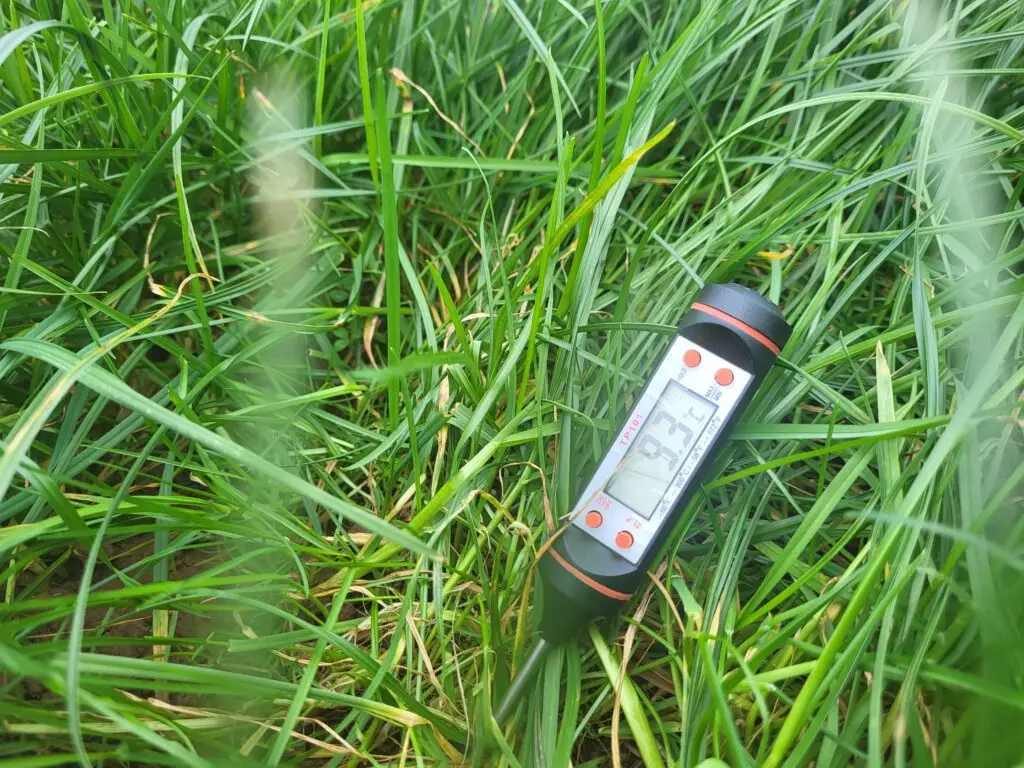
Soils are warming and grass knows it. A soil temperature reading taken in Devon just ten days ago measured 9.3°C, a clear sign that growth is underway.
When checking soil temperature:
- Measure at 10 cm depth
- Between 8–10am
- Over five consecutive days
Grass growth begins around 5°C, but when soil temperature averages 10°c over five days, nitrogen response becomes much stronger.
Nitrogen: Be Strategic, Not Reactive
Before applying nitrogen, check soil temperature. Timing matters.
- Apply post-grazing to heavier covers in the first round
- Lower covers should wait until conditions are fully right
- As a guide:
- 30-40 kg N/ha if silage stocks are tight and you need a growth boost
- Around 20 kg N/ha if demand is lower
Always assess your own situation and sense-check decisions against RB209 – Section 3: Grass and Forage Crops.
And if sulphur isn’t part of your plan, reassess. Sulphur plays a key role in helping plants utilise nitrogen efficiently, improving both response and value (see page 11 of RB209 Grass & Forage Crops).
Growth Is Strong - Keep the Plan Updated
Conditions are warmer than normal, and in some paddocks, regrowth following grazing is already very strong. This is great news but only if your plans keep pace.
Update your spring rotation planners regularly to ensure you stay on target and don’t lose quality going into the second round.
Pressure on Milk Price Means Precision Matters
With milk income under pressure and global events, such as current developments in Iran, likely to influence input prices, attention to detail has never been more important.
Now is the time to challenge:
- Grazed grass quality
- Cow performance
- Your own assumptions
Spring rotation planners and feed budgets aren’t optional – they’re essential tools for navigating uncertainty.
Autumn Calvers: Don’t Miss the Learning Window
For autumn-calving herds, post-breeding PD results bring an opportunity.
While it’s still fresh:
- Review fertility performance
- Identify what worked well
- Be honest about what didn’t and why
Capturing those lessons now sets you up for better outcomes next season.