Skip to content

These animals are the future of the farm, and many consider them the most important members of the herd. Yet, they are often given sub-optimal care, which can lead to reduced growth rates and poorer lifetime performance. A well reared heifer can achieve up to 85% of her mature production in the first lactation, making proper management highly profitable. In this article, we will explore the stages of life for dairy youngstock – from calf to calved heifer – and look at strategies to maximise growth, and reduce the risk of underperforming heifers which ultimately will reduce milk solids and therefore revenue for the business.
Birth to weaning
This is potentially the most critical stage in a youngstock’s life. At this point, the calf is exceptionally efficient at converting input into output, meaning the feed we put in will translate into quicker growth rates and ultimately a better weaning weight. This stage is also vital for reducing mortality as providing calves with strong immunity in early life can be the difference between a successful and a failed rearing process.
We can break the early stage of life into the 5 C’s , with the 3 Q’s forming the foundation for creating the optimum environment for a calf’s early life. This model is widely accepted across the globe. The first critical C is colostrum, which is where the 3 Q’s come into play.
Colostrum
Quickly – Colostrum should ideally be fed within 2 hours of birth and no later than 6 hours after birth. Colostrum fed during the first 2 hours has a higher level of absorption and better passive transfer.
Quality – Colostrum should be a minimum of 22% on a Brix Refractometer or 150mg/ml on a colostrometer when fed to the calf. Any lower risks reduced passive transfer, compromising the calf’s immune system.
Quantity – Aim to feed a minimum of 10% of the calf’s body weight in colostrum within the first 2 hours. A study carried out by Teagasc conducted by Connelly et.al. over a 10-week period, found that calves fed 8.5% of body weight achieved the highest passive transfer rates of all the colostrum feeding regimes.
Feeding transition milk after the first colostrum feed will not boost IgG levels, However, it does have positive effects on other health scoring, as shown by the same study, with reduced incidence of poor eye, ear and nasal health scores.
The next C is Calories.
It is critical to provide calves with enough energy from their feed to support high levels of growth. The amount required can be influenced by environmental factors. The AHDB recommends that calves be fed between 15 and 20% of their body weight in milk or milk replacer. For a 40 kg calf, this equates to a minimum of 6 litres, although 8 litres should be the target. This calorie intake ensures a calf receives enough energy to maintain their body weight with additional energy to place into growth. As the calf approaches weaning, the focus should shift to maximising concentrate intake, with 2 kg of concentrate per day as the target by weaning. A gradual weaning process helps increase concentrate intake, with calves not weaned until they reach 2 kg per day and have achieved at least double their birth weight or are around 10 weeks old. Following a weaning curve will ensure less of a check on growth rates. Throughout early life, it is also critical that calves have access to both water and dry forage. This benefits growth rates and promotes healthy rumen development.
The third C is Cleanliness.
While this may seem obvious, maintaining a clean environment and equipment is essential for reducing health challenges. Bedding needs to be kept clean and fresh, and all feeding equipment should be thoroughly cleaned after each use to prevent any residue that could harbour harmful bacteria. One of the biggest health challenges is Pneumonia. Both clinical and low level sub-clinical cases can have a huge impact. Vaccination is an option, but proactive measures like maintaining cleanliness and comfort, can reduce the risk.
This links nicely with the fourth C, Comfort.
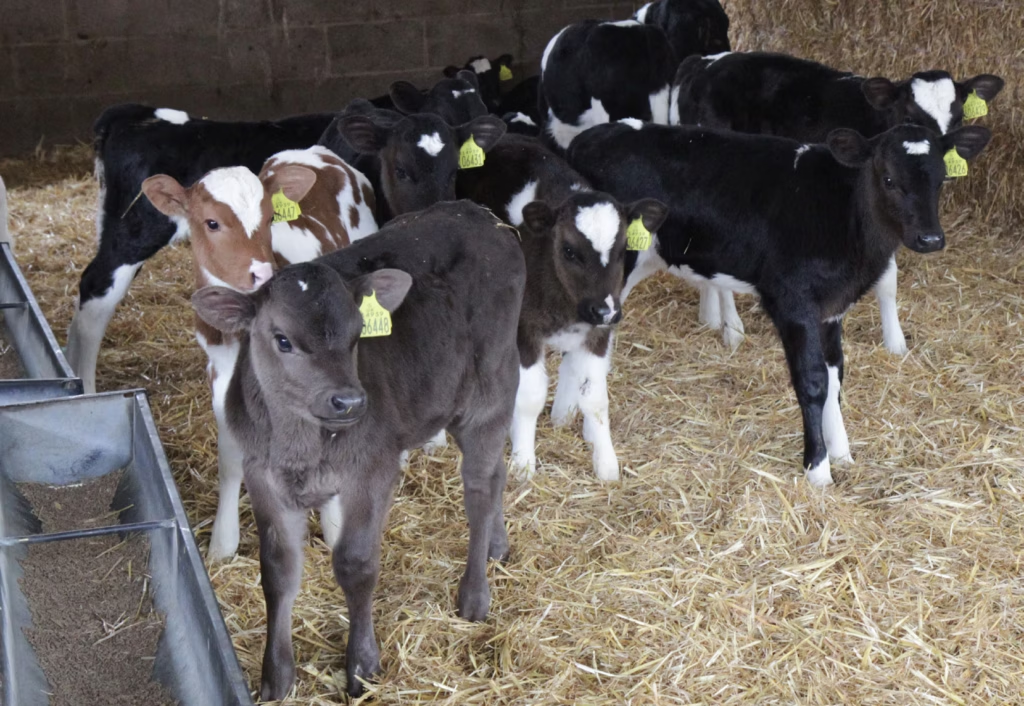
Providing a clean, dry, draft-free environment with adequate space is critical to maintaining homeostasis and minimising stress during a calf’s early life. To achieve this, nesting scores should be regularly checked with a score of 3 being the target where the calves legs are covered by clean, fresh bedding.
The final C is Consistency.
Routine is important for all animals, but it is especially vital for young calves. Automatic feeders help support natural feeding patterns, but even without them, maintaining a consistent schedule is essential. Feeding should occur at the same time each day, and the same feeding regime should be followed consistently – for example, carefully weighing out milk powder for each feed.
These factors directly influence future milk production and reproductive performance, allowing genetic potential to be fully expressed.
Weaning and post weaning
As mentioned above, weaning should be carried out gradually to reduce the growth rate check. This phase is also important for mammary gland development, as most growth of the mammary gland occurs between 3 months and 15 months of age. Another key factor during this stage is maintaining a positive protein-to- energy balance to support skeletal development and preventing excessive fat deposits during mammary gland development.
For many grazing systems, the next step after weaning is getting calves out into the grazing rotation. However, this should not be rushed as holding calves for an extra 1-2 weeks after weaning helps ensure they experience no more than one stress event per week. At turnout, careful management is critical to maintain growth rates and support effective rumen development. This will ultimately result in better DMI in later life, along with increased productivity and longevity within the herd. At weaning, grass can be at its most potent, with high levels of protein and ME levels making it an excellent feed but it does have reduced levels of NDF.
At initial turnout, feeding concentrate should continue. This will not only aid rumen development but help to provide a more balanced, complete diet for the calf. Ideally this should be fed in a trough rather than on the floor, as feeding on the floor in the same place daily can increase contamination and raise the risk of pathogen exposure. Along with feeding concentrate, calves should have access to a forage with higher fibre levels, such as straw or hay, or receive increased fibre intake through feeding supplementary feeds like NIS (Nutritionally Improved Straw). Calves will self-regulate their intake of this forage, which not only optimises rumen development but also supports good health and maximises growth rates.
Grazing management
Spring born calves should be turned out into higher covers of 2500-2800 kgDM but avoid paddocks which have had recent nitrogen applications or very lush grass as this can upset their digestive systems (summer scour). Autumn born calves who have had more time for their rumen to develop, can still be susceptible to summer scour and so should be monitored. Altering the paddock that calves are turned out into each year stops the build-up of pathogens.
First-year calves should not be pushed to graze out paddocks fully. Utilising a leader-follower system will help maintain quality and reduce worm burden within the paddocks. The calves should be kept around 2 weeks in front of the R2 heifers otherwise they will reject the grass. Calves should be moved every 1 to 2 days to keep them on clean pasture. After 1 year of age, heifers can be pushed to achieve residuals, which will help prepare them for efficient grazing as mature cows.
Where possible keep the calves and heifers away from the milking platform and where your dairy cows have grazed. This will help to reduce the risk of the calves contracting Johne’s Disease.
Service and calving targets
By following the steps above, heifers should easily reach their weight targets for both service and calving.
It is also important to continue monitoring growth rates throughout the heifer rearing process, ideally weighing monthly. This will allow you to identify any animals that fall below target and address the issue before they reach the breeding period. The target liveweight for service is 65% of mature weight. For a 500 kg mature cow this equates to 325 kg, while for a 550 kg mature cow, the target is 357.5 kg at the start of the service period.
If calves are born at an average of 38 kg for a 550 kg cow, this means a growth rate average of just over 700 g per day.
By calving, heifers should reach around 90% of their mature liveweight, with their frame fully developed and the remaining 10% made up through weight gain. Heifers that consistently meet weight targets are more likely to conceive on time and calve at 2 years of age. This is associated with improved longevity and overall performance, ensuring that elite genetics remain productive for longer. This should allow heifers to comfortably achieve 85% of a mature lactation.
Conclusion
Growing heifers successfully and placing close attention to the rearing process is critical for ensuring high levels of performance. Effective rearing not only improves productivity of the heifer crop but also leads to reduced replacement costs and improved part of the dairy herd for longer. Heifers that fall below target weights often experience delayed puberty, lower conception rates, a reduced number of lactations and lower overall lifetime yields. This is why heifer rearing must remain a key focus, not only to ensure greater performance, but most importantly, to ensure the full expression of genetic potential.
Every AI straw or genomic selection represents an investment in herd improvement. By prioritising growth, health, and consistency throughout the rearing process, farmers safeguard their genetic progress and accelerate overall herd improvement.
Together we can make the best breeding decisions for your herd and ensure the elite genetics selected within each herd achieve their true potential. fertility outcomes for both the maiden heifer and during her first lactation, ensuring she remains a productive