Skip to content

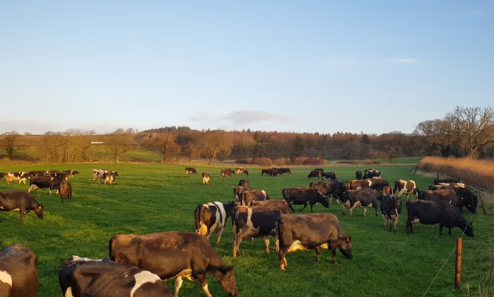
According to LIC UK Pasture to Profit Consultants, conditions vary significantly across the country. While the Northwest continues to receive regular rainfall and is achieving grass growth rates of around 40–60kg DM/ha/day, many other regions are experiencing prolonged dry conditions, with grass growth slowing and paddocks beginning to brown off.
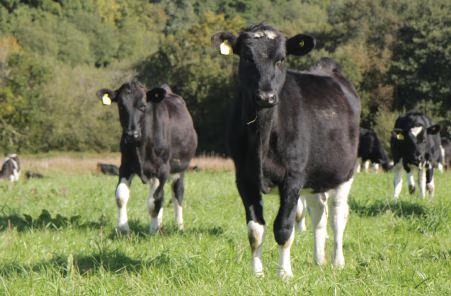
The recent hot weather has also brought challenges in the dairy shed, with heat stress impacting cow performance and contributing to drops in both milk volume and solids. To help maintain feed quality and slow rotation speeds, many farmers have introduced supplementary feeding into their systems.
Key Focus Areas for the Weeks Ahead
The consultants recommend slowing rotation speeds to maintain average farm cover and protect grass plants during dry conditions. Preserving average cover will help speed recovery once rainfall returns.
Even when rain does arrive, supplement feeding should continue for at least two weeks. This allows pastures time to recover, while dead material broken down by moisture can temporarily reduce available feed.
As growth rates improve, rotation speeds can gradually increase, but only once average farm cover returns to target levels.
For farms feeding supplements on pasture, paddocks earmarked for reseeding are the preferred option, while fields with high potassium (K) indexes should be avoided where possible.
They also advise caution when applying nitrogen following rainfall. Dry conditions can lead to a build-up of nitrogen in the soil, meaning applications should be carefully assessed to avoid unnecessary use and potential losses.
With weather patterns remaining unpredictable, maintaining pasture covers and protecting plant recovery will be critical to setting farms up for strong autumn growth.